← Baroque Mughals and Companies
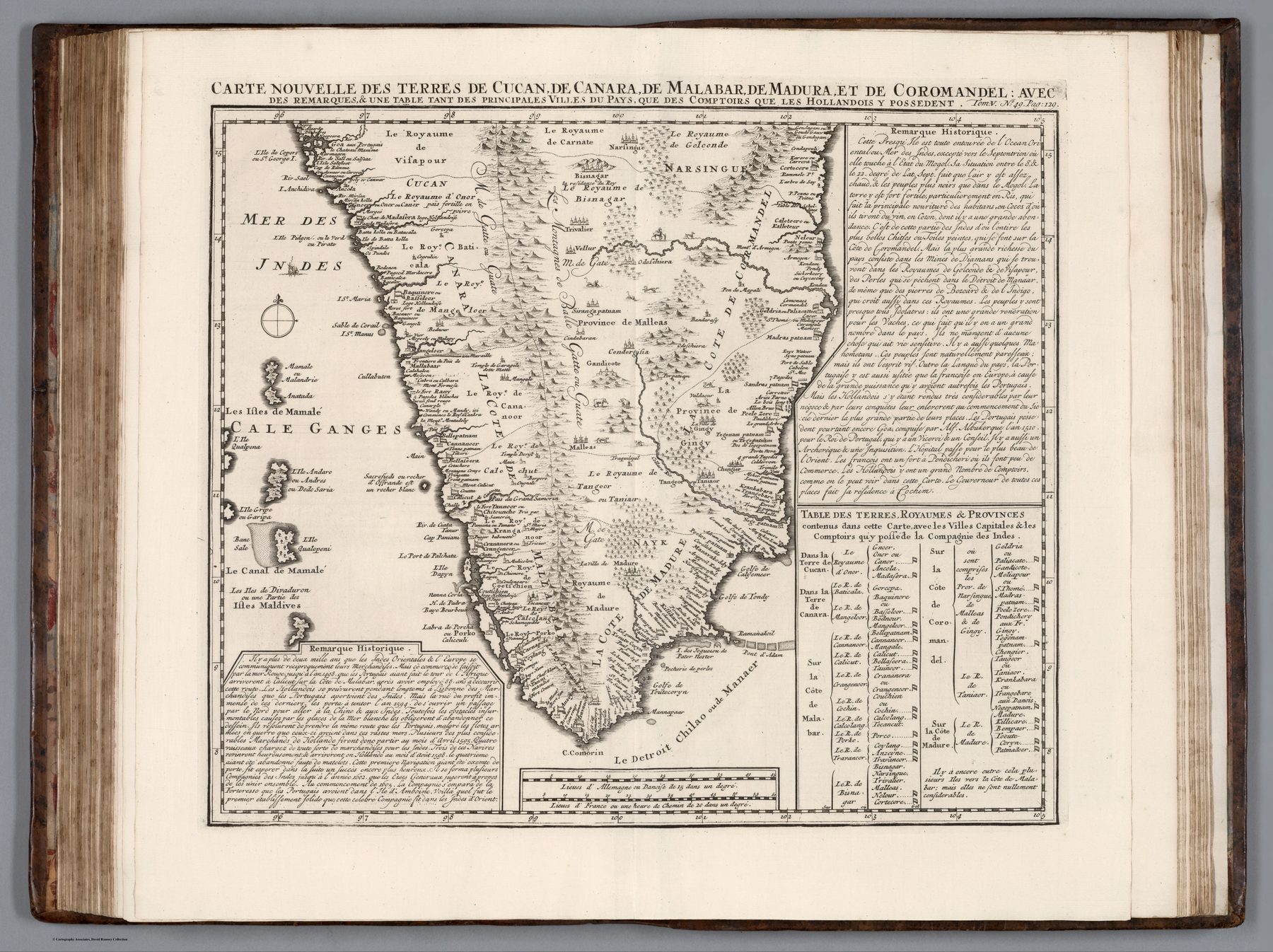
Tome V. No. 49. Pag. 129. Carte nouvelle des terres de Cucan, de Canara, de Malabar, de Madura
The complete sheet
The full title extends beyond the map itself: it promises remarks, a table of principal towns and an account of the trading posts held by the Dutch. The object is therefore designed as a combined map and reference page, not as an isolated geographical image.
The coast of the companies
Konkan, Canara, Malabar, Madurai and Coromandel are the coasts along which European companies maintained ports, factories and alliances. The table converts that shoreline into an inventory of establishments. Political and cultural regions are reorganised around points of commercial access.
Information as comparison
The reader can move between map, remarks and table, comparing settlements and company presence. This is characteristic of the Atlas Historique: geography expanded into an encyclopaedic apparatus that makes distant places available for systematic consultation.
The gaze
India is seen through the company ledger. The land behind the coast matters, but the organising facts are harbours, factories and the European powers attached to them. Commerce has not yet become territorial rule, but it is already a way of ordering the map.