← Home Ground Bombay and Deccan
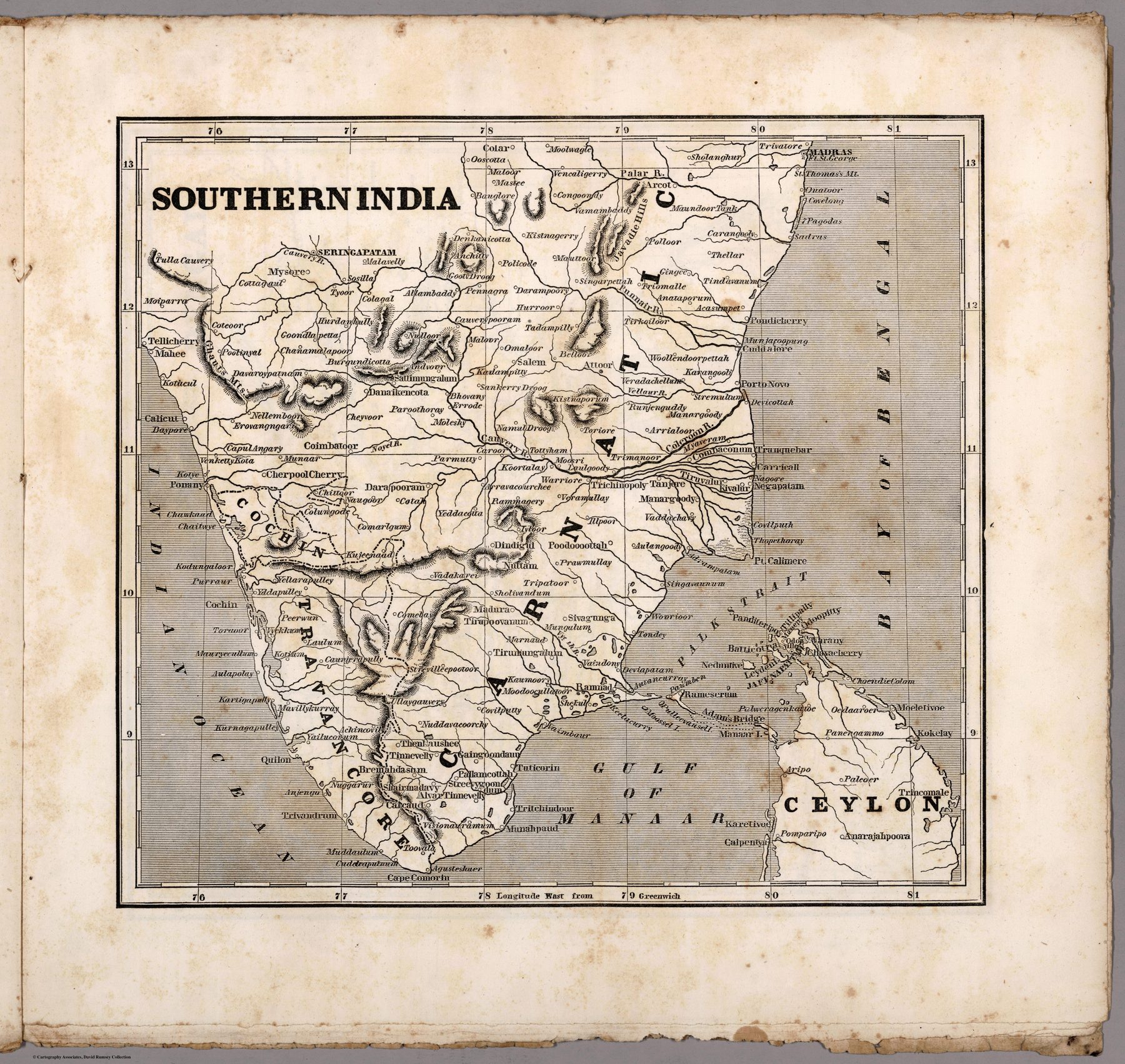
Southern India
A missionary atlas
Morse published the Cerographic Missionary Atlas in New York in 1848 and distributed it without separate charge to subscribers of the New York Observer. The atlas used cerography, a wax-engraving process associated with inexpensive and rapid map production, to show regions in which Protestant missionary activity was occurring.
A different institutional purpose
The base geography resembles contemporary general maps: regions, settlements, rivers and hachured mountains. Its selection and publication context, however, direct the reader toward mission fields rather than military routes or colonial districts. The intended user is a supporter, reader or organiser of missionary work in the United States.
The gaze
The map replaces the official and commercial gaze with an evangelical one, but it retains the same confidence that distant populations can be organised on paper for intervention. Southern India becomes a territory of denominational concern, its people encountered through the geography of missions rather than through their own religious and social worlds.