← Home Ground Bombay and Deccan
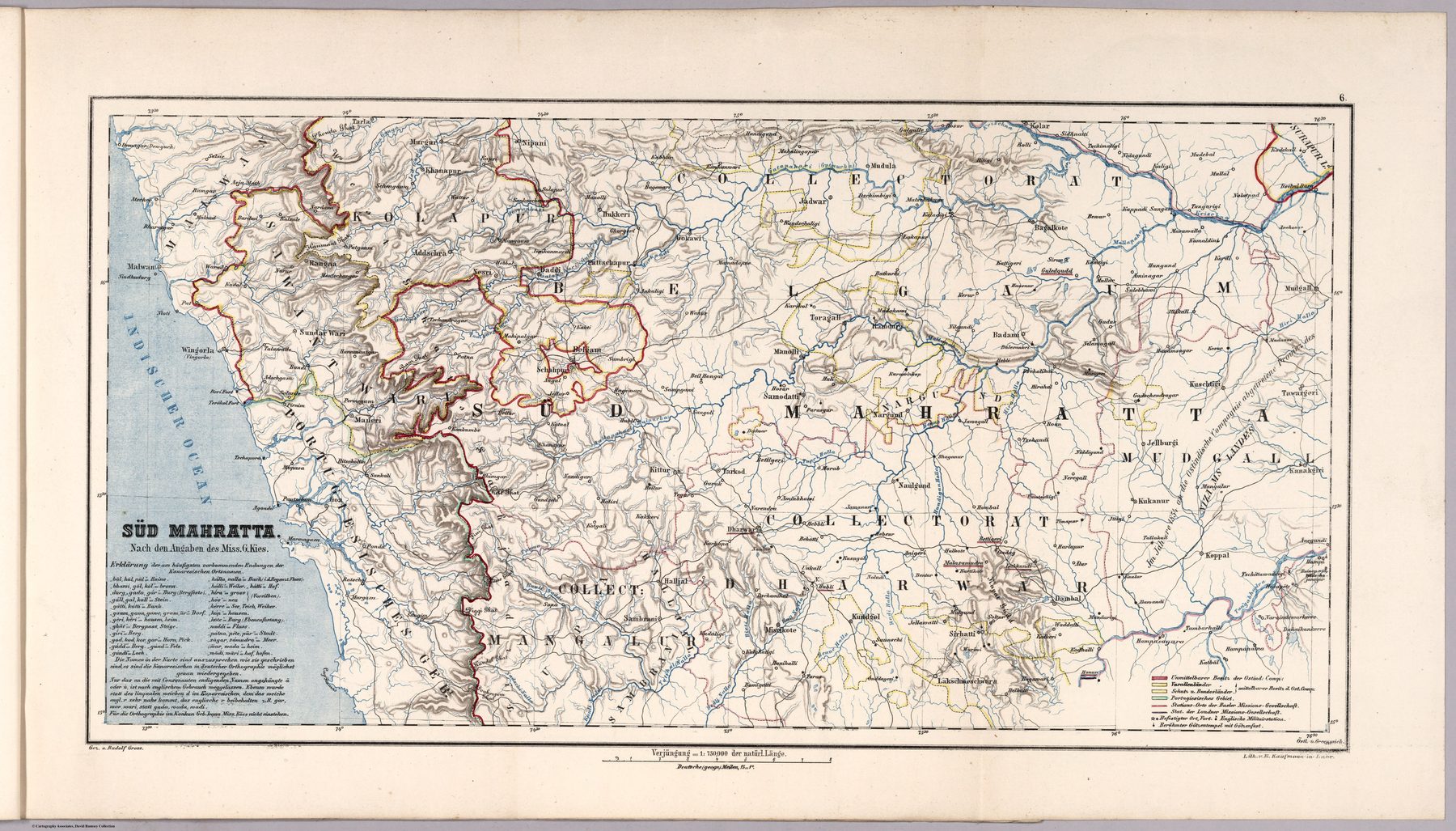
Süd Mahratta (South Maratha)
The mission atlas
Inspector J. Josenhans compiled the Atlas der Evangelischen Missions-Gesellschaft zu Basel from reports supplied by missionaries. This second-edition sheet was engraved in Basel and published in 1859 at a substantially larger scale than general maps of India.
A locally defined field
The map’s extent follows the Mission’s operational geography. Settlements, routes and local divisions matter because they organise travel, stations and prospective congregations. Its regional focus is closer to the ground than the worldwide missionary atlas represented elsewhere in the collection.
Knowledge through presence
Missionaries generated geographic information through long residence and movement, but their map was not neutral local description. It converted the country into a field of intervention, selecting what was useful to an institution seeking durable religious presence.
The gaze
India is seen parish by prospective parish. The missionary gaze shares colonial cartography’s appetite for legibility while pursuing a distinct form of occupation: not formal sovereignty, but the spatial organisation of conversion.