← Administered Empire and Victorian Atlas
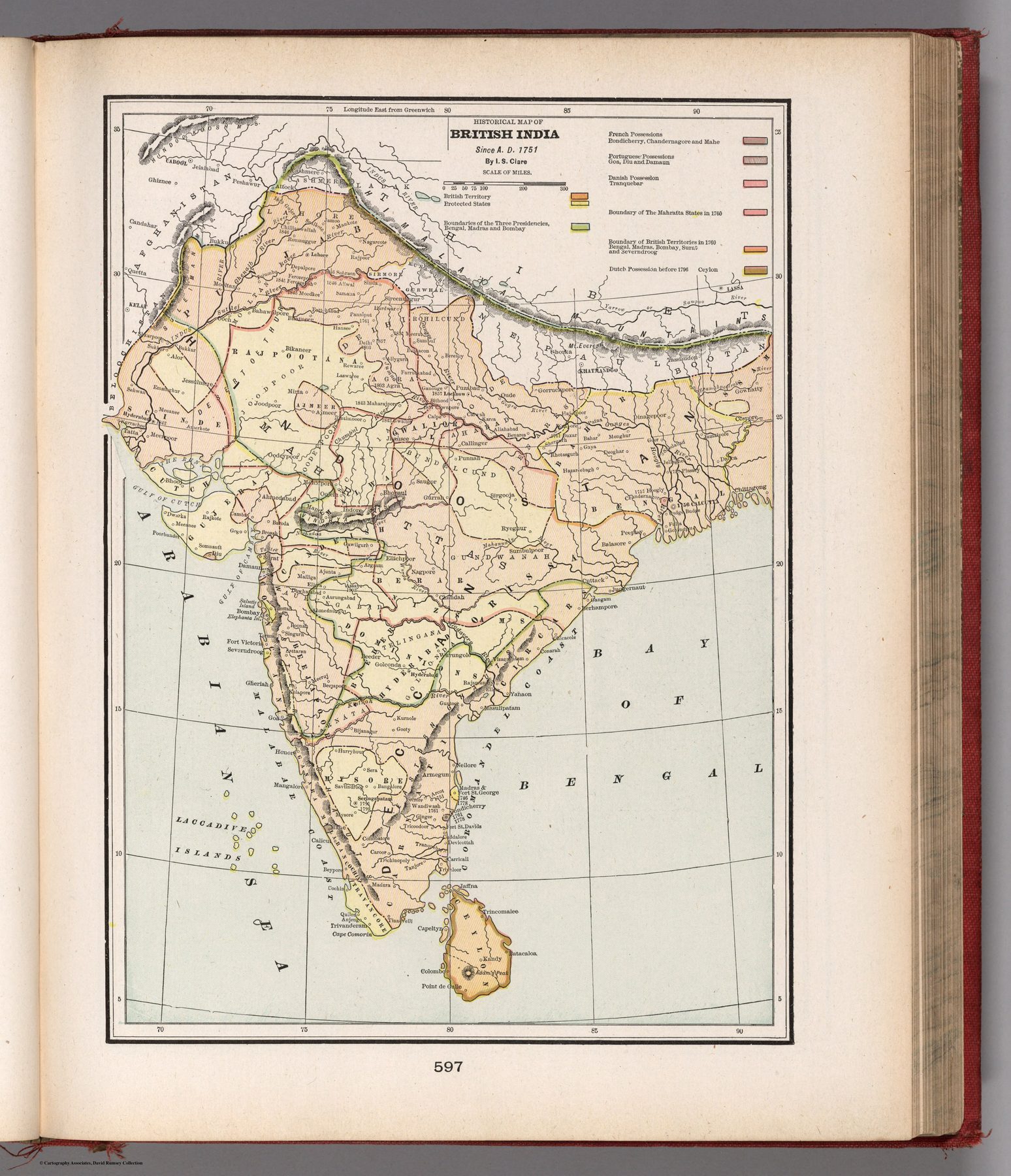
Historical Map of British India since A.D. 1751
Authorship and atlas
The map was drawn by I. S. Clare and published in the 1901 census edition of G. F. Cram’s world atlas, associated with George Franklin Cram and Eugene Murray-Aaron. Naming the map author separately avoids attributing the plate itself solely to the atlas editors.
History made spatial
The title selects 1751 as the beginning of its narrative frame. European possessions and the extent of British India are presented as the outcome of a historical process that can be surveyed retrospectively on one sheet.
A finished imperial story
For an American atlas reader in 1901, British domination could appear as a completed chapter of world history. The conflicts, negotiations and varied sovereignties through which it emerged are compressed into a stable coloured result.
The gaze
India is seen in the past tense of conquest. The map does not simply show territory; it organises memory, inviting the viewer to read British India as the coherent culmination of events beginning in the eighteenth century.