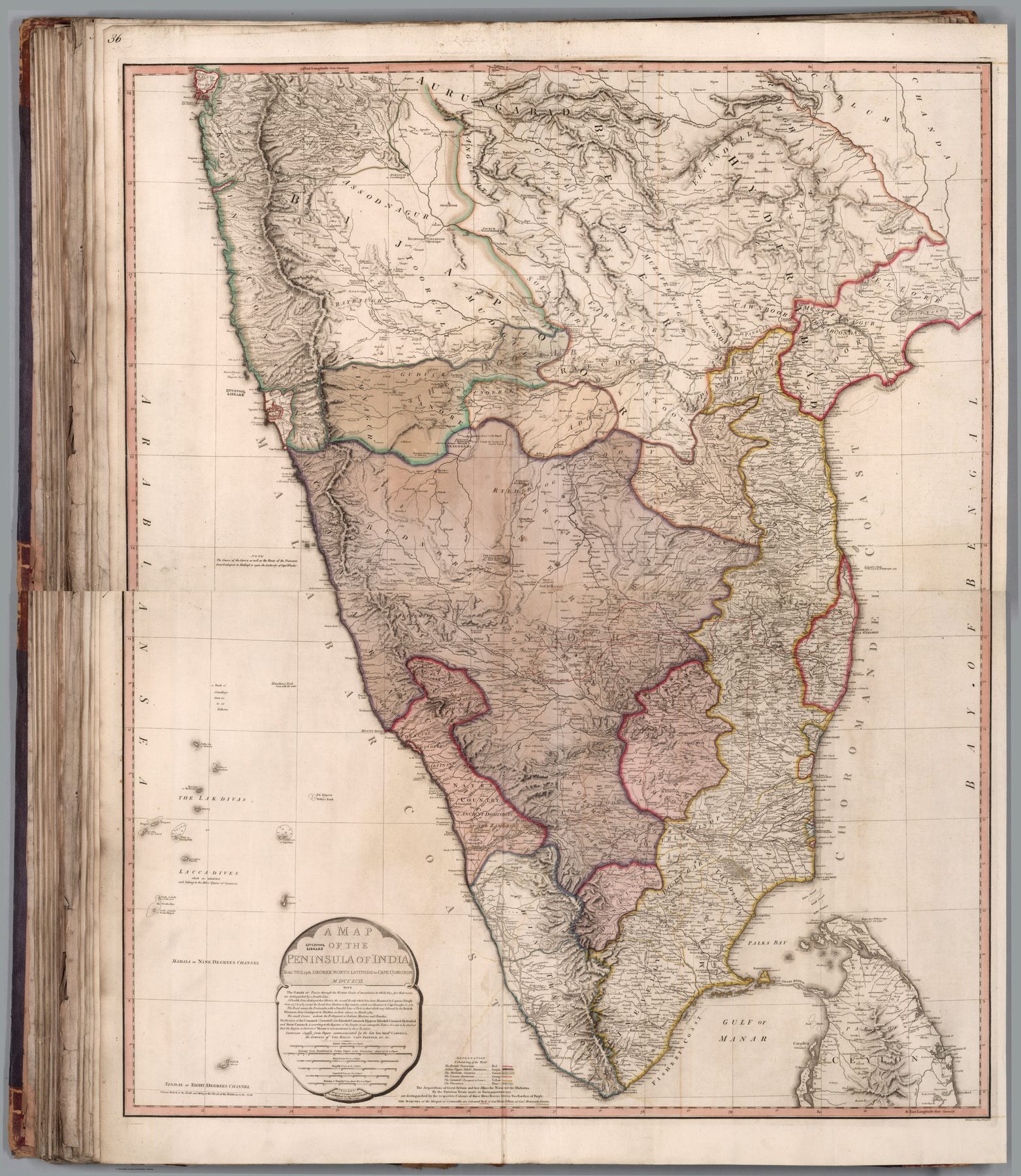
A Map of the Peninsula of India to Cape Comorin
Date, publication and object
The title carries the Roman date 1792; Faden’s imprint states 1 May 1793. The map was engraved by R. Baker on two sheets and depicts the peninsula from 19° north to Cape Comorin at a scale large enough to show roads, settlements, rivers, relief and extensive explanatory notes.
A contested peninsula
The map appeared as the Third Anglo-Mysore War ended. Recent campaigns had generated surveys and route intelligence across southern India, while the resulting settlement altered Company influence over Mysore and its neighbours. The sheet should not be reduced to a campaign plan, but its density and timing belong to the military and political remaking of the region.
From general outline to operational ground
Earlier maps made the peninsula one component of ‘India’ or the ‘East Indies’. Faden enlarges it into a working territorial field. Roads and named interior places matter alongside coasts; explanatory notes preserve the provenance and uncertainty of particular observations.
The gaze
The survey turn reaches campaign scale. Southern India is not merely represented but made traversable on paper, its distances and routes available to officials, soldiers and readers in London. Measurement follows conflict and, in turn, supports the administrative order created by it.