← Administered Empire and Victorian Atlas
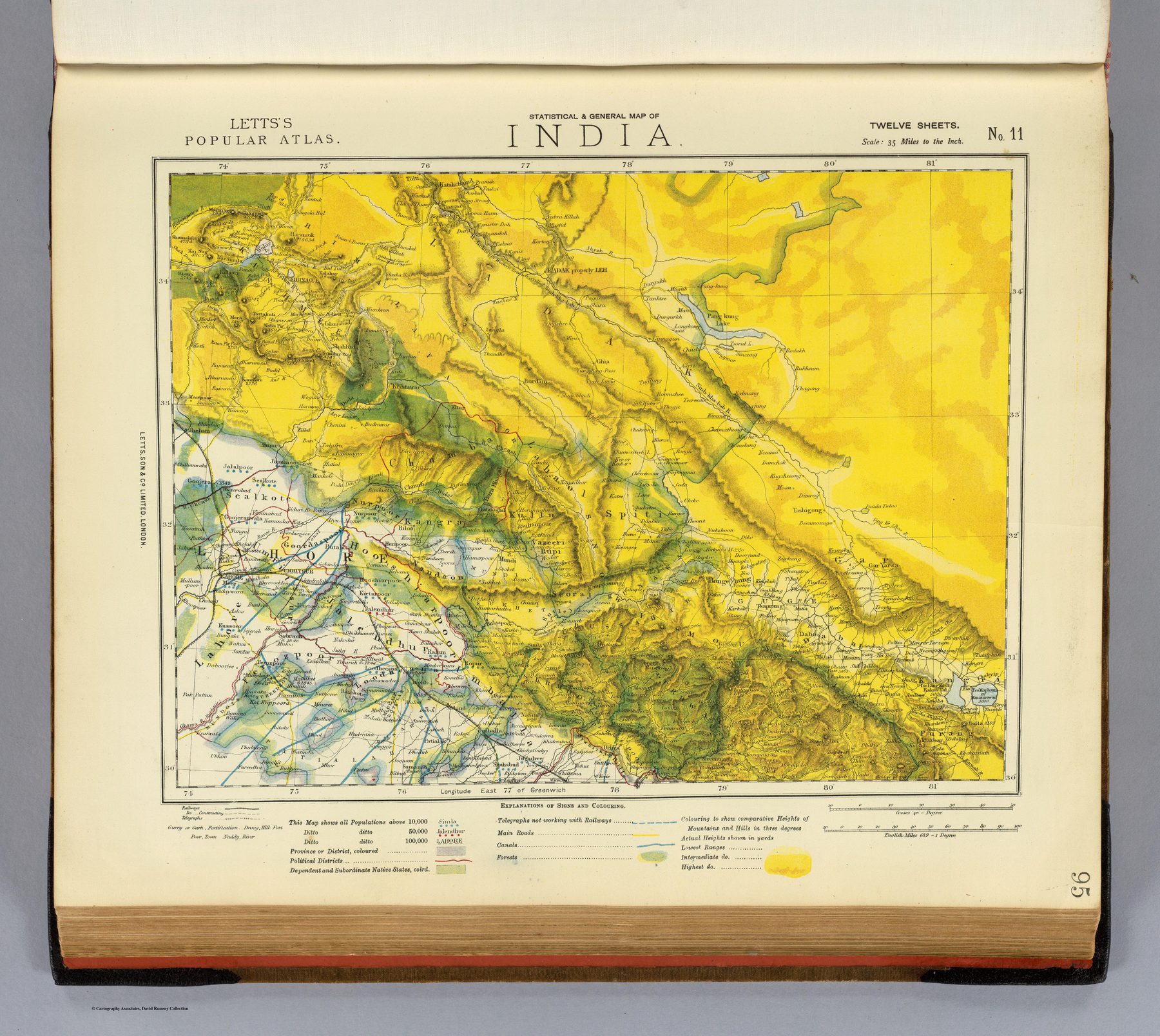
India No. 11: Statistical and General Map
The popular atlas sheet
Published by Letts, Son & Co. in 1883, the map belonged to a commercial “popular atlas.” Its crowded content was a selling point: one sheet promised political reference, transport information and statistical or economic detail together.
Infrastructure as geography
Rail and telegraph lines, roads, ports, lighthouses and selected products or land uses make the imperial network visible. The map is concerned less with a single thematic argument than with the accumulated apparatus through which the subcontinent functioned.
The colony as system
By the late nineteenth century an atlas reader could expect India to be represented not merely by borders and principal towns but by communications and productive capacity. The country is visualised as an economy joined by engineered lines.
The gaze
This is the administered empire understood as infrastructure. To know India is to inventory what it contains, how it communicates and where its resources enter the imperial network.